Egypt is currently witnessing an unprecedented infrastructure boom. From the development of the New Administrative Capital (NAC) to the expansion of the Suez Canal Economic Zone (SCZONE), the demand for high-quality ERW (Electric Resistance Welded) steel pipes has surged. As the gateway between Africa and the Middle East, Egypt’s industrial strategy "Vision 2030" prioritizes urban development, energy self-sufficiency, and advanced manufacturing.
ERW steel pipes are the backbone of this transformation. Unlike seamless pipes, ERW pipes offer a cost-effective yet highly durable solution for low to medium-pressure applications, making them ideal for Egypt's expanding water desalination plants, natural gas distribution networks, and structural scaffolding for the thousands of residential units rising in New Cairo and Alexandria.
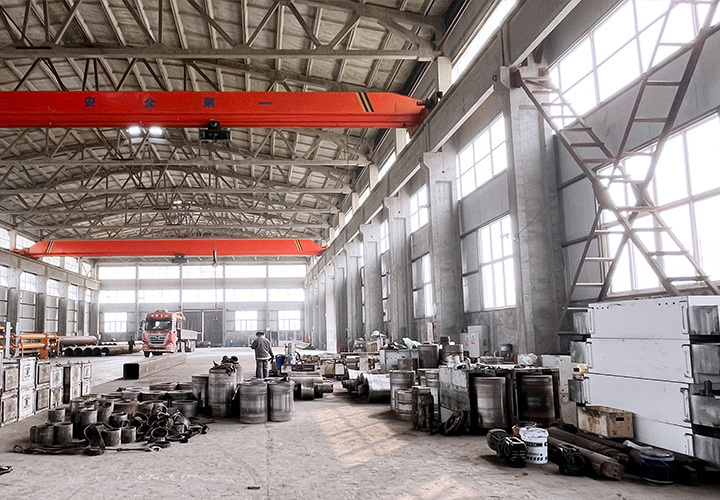
Utilizing High-Frequency Induction (HFI) welding processes to ensure a weld seam strength that matches the parent metal, essential for Egyptian structural safety standards.
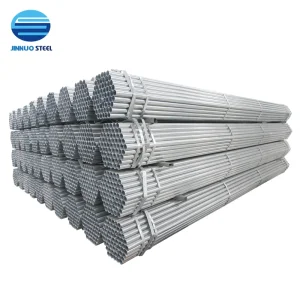
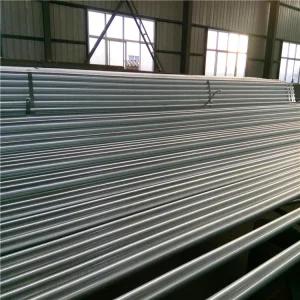
Specialized in Hot-Dipped Galvanization and Epoxy Painting, providing superior corrosion resistance against Egypt's salty coastal humidity in Port Said and Suez.
All ERW pipes manufactured for the Egyptian market strictly adhere to ASTM A53, API 5L, and EN10219 standards, ensuring E-E-A-T compliant quality.
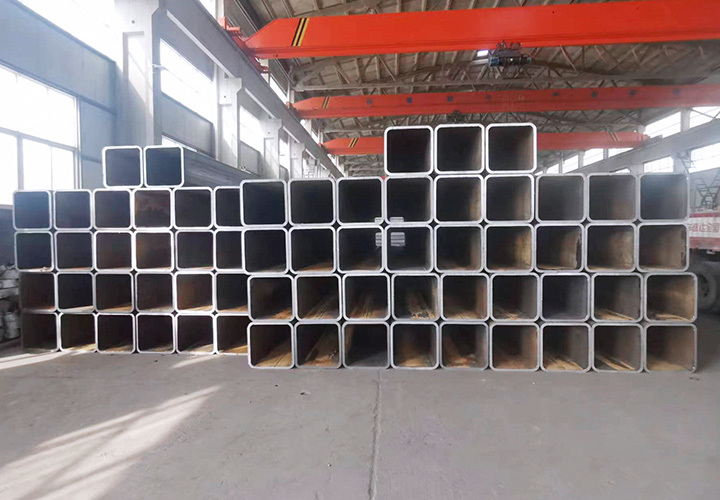
Dongguan Dactron Pipes Co., Ltd. is a professional manufacturer specializing in steel pipes and steel tubes, offering carbon, seamless, and welded steel solutions for a wide range of industrial applications. Founded in 2012, Dactron began as a regional supplier of standard carbon steel pipes. By 2016, we expanded into high-tech ERW pipe manufacturing.
With a robust export infrastructure, we have become a leading supplier to the North African market, specifically catering to the Egyptian construction and engineering sectors. Our ISO 9001 certification and commitment to innovation ensure that every meter of steel pipe delivered to Alexandria or Cairo meets the highest global benchmarks.
With the discovery of the Zohr gas field, ERW pipes are increasingly used for inland transport lines where pressure requirements are moderate but durability is non-negotiable.
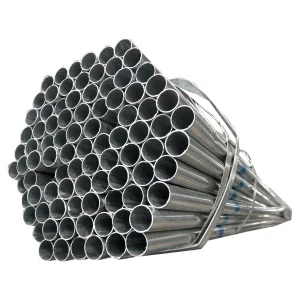
Egypt's massive land reclamation project relies on ERW galvanized pipes for irrigation systems and deep-well water transport across the Western Desert.
High-strength carbon steel ERW pipes serve as the structural framework and scaffolding for the iconic towers and residential complexes shaping the NAC skyline.
[Trend 01: Localization of Manufacturing] The Egyptian government is incentivizing the localization of steel fabrication. As a result, importers are looking for partners who can provide semi-finished ERW tubes that can be customized or further processed in local Egyptian workshops to meet "Made in Egypt" requirements.
[Trend 02: Green Steel Initiatives] With COP27 having been hosted in Sharm El-Sheikh, there is a massive push towards "Green Construction." Dactron is adapting by optimizing our ERW production lines to reduce carbon footprints, a key requirement for international contractors working on Egyptian mega-projects.
[Trend 03: Digital Procurement] The Suez Canal Economic Zone is adopting smart logistics. Egyptian buyers now demand real-time tracking and digital quality certifications (MTC), which Dactron provides to ensure a transparent supply chain from Dongguan to Sokhna Port.
The synergy between Egypt's strategic location and Dactron’s manufacturing prowess creates a formidable supply chain. Whether it is for fire-fighting systems in Luxor or industrial piping in Damietta, ERW steel pipes remain the most versatile and reliable choice for the modern Egyptian engineer.
Our expertise is backed by a decade of steel pipe manufacturing, ensuring authoritativeness and trustworthiness in every shipment.
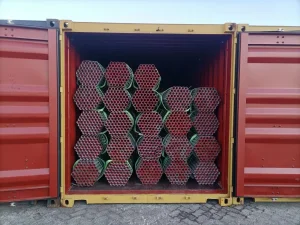
Efficient shipping routes to Alexandria, Sokhna, and Damietta ports, ensuring your construction timeline is never delayed.
Direct factory prices without compromising on the stringent ASTM B and API 5L quality requirements.
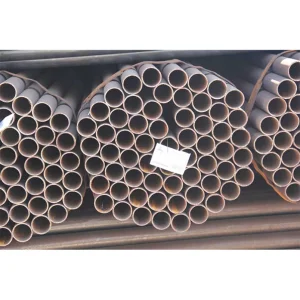
Electric Resistance Welded (ERW) pipe is manufactured by cold-forming a sheet of steel into a cylindrical shape. Current is then passed between the two edges of the steel to heat the steel to a point at which the edges are forced together to form a bond without the use of welding filler material. Initially this manufacturing process used low frequency A.C. current to heat the edges. This low frequency process was used from the 1920s until 1970. In 1970, the low frequency process was superseded by a high frequency ERW process which produced a higher quality weld.
Over time, the terms used to describe ERW pipe have evolved. Today, ERW pipe in the Egyptian market refers to the high-frequency welded variety, often utilized in high-stress environments. Whether you are sourcing for the New Administrative Capital's HVAC systems or for oil refineries along the Red Sea coast, understanding the grade is crucial. We offer Grade A and Grade B ASTM A53 pipes, where Grade B is most common in Egypt due to its higher tensile strength of 60,000 psi.
Dongguan Dactron Pipes Co., Ltd. provides comprehensive testing including Hydro-testing, Ultrasonic testing, and X-ray inspection to ensure that our Egyptian partners receive only the most reliable steel. Our 304L and 316L stainless steel ERW variants are also widely used in the Egyptian food processing and pharmaceutical industries due to their hygienic properties and resistance to localized pitting.
As the leading ERW steel pipe exporter to Egypt, we invite you to consult with our technical team for customized wall thicknesses, lengths (ranging from 4m to 10m), and specialized end-finishes including grooved, threaded, or beveled edges.
 Dactron Pipe