Engineered to exceed ASTM, EN, ISO, and API standards for structural integrity and longevity.
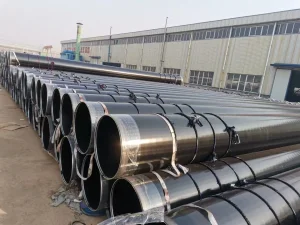
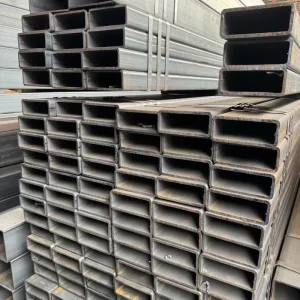
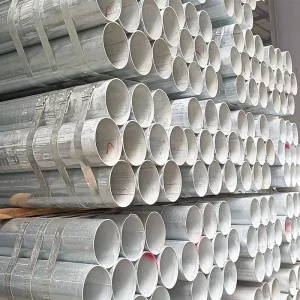
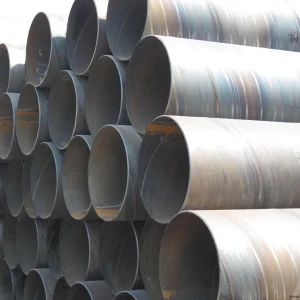
In the global macro-industrial framework, structural steel plates and heavy-duty structural steel tubes form the structural backbone of modern urban infrastructure, maritime vessels, offshore renewable installations, and heavy equipment manufacturing. As global procurement shifts toward verified material performance, environmental sustainability, and total cost of ownership (TCO) optimization, identifying a reliable China structural steel plates supplier has evolved from simple vendor selection into a strategic enterprise decision.
China's steel ecosystem produces over half of the world's raw structural steel, backed by advanced Thermo-Mechanical Controlled Processing (TMCP) technology, sophisticated automated rolling mills, and vertically integrated supply chains. This comprehensive whitepaper explores the underlying metallurgical properties, industrial applications, supply chain resilience factors, global regulatory compliance criteria, and future technology roadmaps driving China's leading structural steel manufacturers.
Core Procurement Insight: Modern structural engineering demands high yield strength, superior weldability, and low-temperature impact toughness. Choosing suppliers capable of delivering fine-grained micro-alloyed structural plates (e.g., S355JR, S690QL, Q355E, ASTM A572 Grade 50) directly reduces structural weight while increasing fatigue resistance in critical load-bearing applications.
Operational Excellence, Manufacturing History, and Technical Capability Overview
Dongguan Dactron Pipes Co., Ltd. is a professional manufacturer specializing in steel pipes and steel tubes, offering carbon, seamless, and welded steel solutions for a wide range of industrial applications. Located in Dongguan, one of China’s leading manufacturing centers, the company benefits from advanced infrastructure, skilled workforce, and efficient global logistics.
Founded in 2012, Dactron began as a regional supplier of standard carbon steel pipes for construction and mechanical use. With continuous investment in production technology and quality control systems, the company expanded into seamless and welded steel pipe manufacturing by 2016. In 2019, Dactron further enhanced its capabilities by introducing automated production lines and precision testing equipment, enabling it to meet the growing demands of international markets.
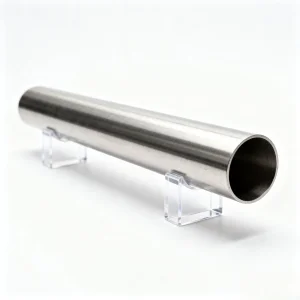
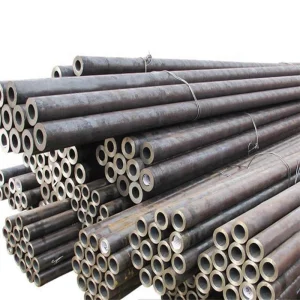
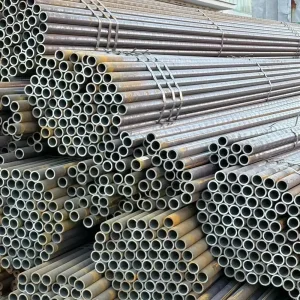
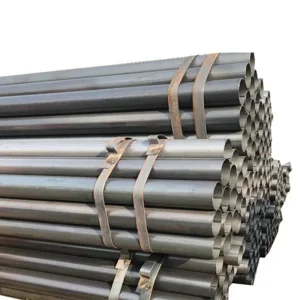
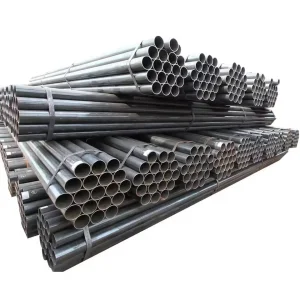
The company’s product portfolio includes seamless steel pipes, welded steel tubes, ERW pipes, structural tubes, and customized solutions for various industries such as construction, oil & gas, infrastructure, and machinery manufacturing. All products are manufactured in accordance with international standards and undergo strict inspection to ensure durability, strength, and performance.
Dongguan Dactron Pipes Co., Ltd. operates under ISO 9001 quality management systems and supports OEM/ODM services to meet diverse customer requirements. With a commitment to innovation, reliability, and customer satisfaction, Dactron continues to deliver cost-effective steel piping solutions worldwide.
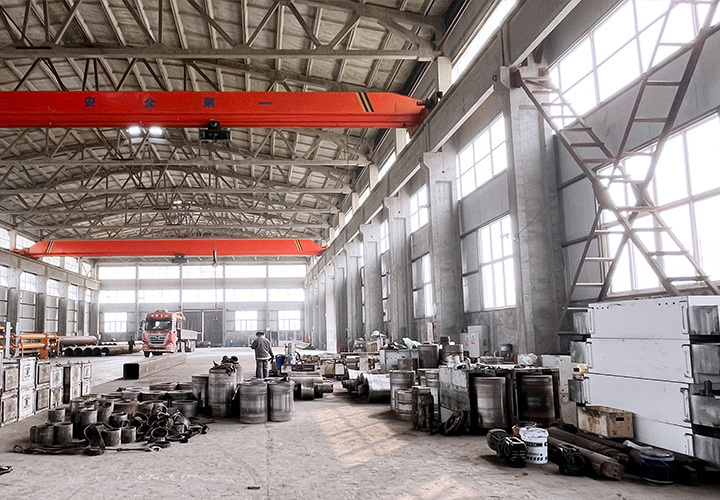
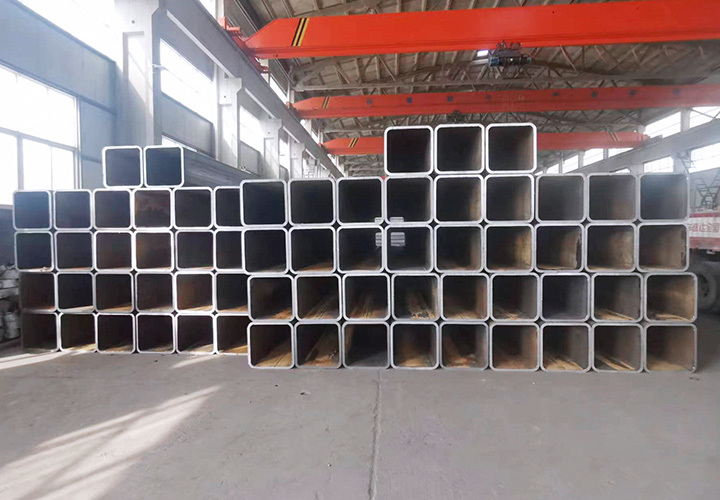
How integrated industrial clusters deliver unmatched scalability, cost control, and quality consistency.
China's top steel mills operate closely with major iron ore processing facilities and continuous casting plants. This proximity ensures uninterrupted supply of premium slabs, billets, and hot-rolled coils, minimizing raw material lead times and buffer costs.
Modern Chinese production facilities feature fully automated wide-heavy plate rolling lines equipped with computer-controlled Hydraulic Automatic Gauge Control (AGC). This ensures tight dimensional tolerances (thickness, width, flatness) across high-volume production batches.
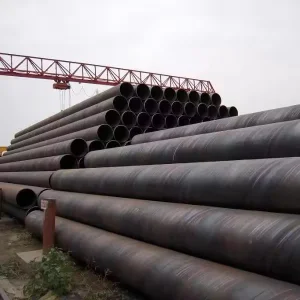
Strategic positioning near deep-water maritime hubs such as Shenzhen, Guangzhou, and Ningbo enables direct vessel loading for heavy structural steel plates and oversized SSAW/LSAW pipes, drastically lowering containerized and break-bulk shipping overheads.
The engineering requirements for modern structural steel have progressed beyond basic carbon-manganese compositions. Today’s industrial frameworks require advanced micro-alloying and precisely controlled heat treatment protocols to balance high tensile strength with exceptional crack-arrest properties and low Carbon Equivalent Value (CEV) for optimal weldability.
TMCP technology represents a cornerstone in high-strength structural plate manufacturing. By precisely regulating rolling temperatures and accelerated cooling rates, TMCP refines the microstructural grain size down to the ultrafine ferrite and bainite phase. This allows suppliers to achieve yield strengths exceeding 550 MPa to 960 MPa without increasing carbon additions, completely eliminating the need for expensive post-weld heat treatment (PWHT) in many structural applications.
By incorporating minute quantities of Niobium (Nb), Vanadium (V), and Titanium (Ti), structural steel plates form fine carbide and nitride precipitates. These precipitates pin grain boundaries, preventing grain growth during thermal processing and welding operations, thereby guaranteeing structural toughness even under sub-zero arctic conditions (-40°C to -60°C Impact Test Requirements).
| Steel Grade Category | Standard Equivalents | Yield Strength (MPa) | Tensile Strength (MPa) | Key Engineering Applications |
|---|---|---|---|---|
| Mild Carbon Steel | ASTM A36 / Q235B / S235JR | ≥ 235 | 360 - 510 | General construction, light framing, scaffolding, non-critical pipe supports. |
| High-Strength Low-Alloy (HSLA) | Q355B/E / ASTM A572 Gr50 / S355JR | ≥ 355 | 470 - 630 | High-rise buildings, bridges, structural tubing, SSAW pipeline foundations. |
| Quenched & Tempered (Q&T) | S690QL / Hardox 400 / Q690D | ≥ 690 | 770 - 940 | Crane booms, mining truck bodies, offshore oil platforms, excavator chassis. |
| Corrosion Resistant / Weathering | Corten A/B / S355J2W / Q355NH | ≥ 355 | 490 - 650 | Unpainted bridge structures, architectural facades, marine container frames. |
Looking toward the 2030-2050 net-zero targets, top Chinese steel mills are transitioning from classic blast-furnace routes to Electric Arc Furnaces (EAF) powered by renewable energy, and Direct Reduced Iron (DRI) utilizing hydrogen reducents. This green steel transition enables project developers to meet scope 3 carbon emission requirements while maintaining structural integrity.
Delivering high-reliability steel plates and structural pipes for diverse regional environments.
Heavy thickness plates (50mm–150mm) engineered for monopiles, jacket foundations, and transition pieces. Designed to withstand cyclic wave loading, saltwater immersion, and severe fatigue stress.
Weather-resistant Corten and S355J2 plates featuring high impact toughness at -20°C. Applied in long-span suspension bridges, box girders, and urban elevated highway structures.
Quenched and tempered high-yield plates (e.g., S690QL) providing extreme abrasion resistance and structural weight reduction for excavators, dump bodies, and crushing plant hoppers.
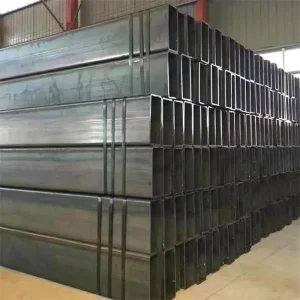
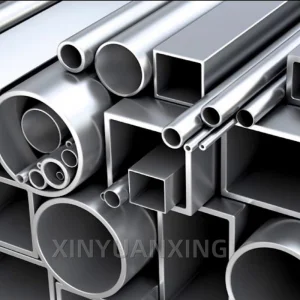
Cold-formed and hot-finished structural hollow sections (square, rectangular, round SSAW/ERW tubes) offering high torsional rigidity and sleek architectural aesthetics for airport terminals and skyscrapers.
Procuring structural steel from China requires navigating international quality standards, local building codes, and third-party inspection verification. Leading Chinese suppliers provide full traceability from heat number to final mechanical test certificate.
E-E-A-T Quality Assurance Note: Reliability is established through third-party inspection agency (TPIA) involvement. Industry leaders regularly collaborate with SGS, Bureau Veritas (BV), TÜV Rheinland, and DNV GL to conduct witness testing before ocean freight shipment.
Technical responses for structural engineers, procurement managers, and steel buyers.
Explore specialized seamless tubing, high-temperature alloys, and heavy structural hollow profiles.
 Dactron Pipe