Why Is Piping System Maintenance So Expensive?
Piping maintenance becomes expensive long before a visible leak appears. Corrosion may hide beneath insulation, paint, supports, or stagnant liquid. A small flange leak can also trigger isolation, drainage, gas testing, scaffolding, permits, and production delays. The repair itself may take two hours. Preparing the system can take two days.
John Moubray, a leading authority on reliability-centred maintenance, wrote, “Maintenance is about preserving the functions of assets, not the assets themselves.” This principle matters in piping systems. The goal is not replacing every old valve or repainting every line. It is protecting flow, pressure control, containment, and safe operation. Experienced maintenance teams inspect high-risk areas first, including dead legs, welds, low points, injection points, and pipe supports. They compare inspection history with operating conditions. Temperature changes, vibration, chemical exposure, and repeated starts can reveal risks that a basic visual check misses.
So, how to reduce maintenance costs in piping systems? Begin with accurate asset records, practical risk ranking, and condition-based inspections. Repair recurring causes instead of repeatedly treating symptoms. Standardize valves, gaskets, and fittings where appropriate. Keep critical spares available, but avoid filling a warehouse with rarely used parts. Digital records can help, although poor data still creates poor decisions. That weakness deserves attention.
Cost reduction is not always a cheaper repair. A low-cost clamp may postpone failure, while a properly planned replacement prevents another shutdown. The difficult judgment is knowing which one applies. Reliable results require skilled engineers, documented inspections, realistic budgets, and lessons learned from every leak, vibration event, and unplanned outage.
What Makes Piping System Maintenance Necessary?
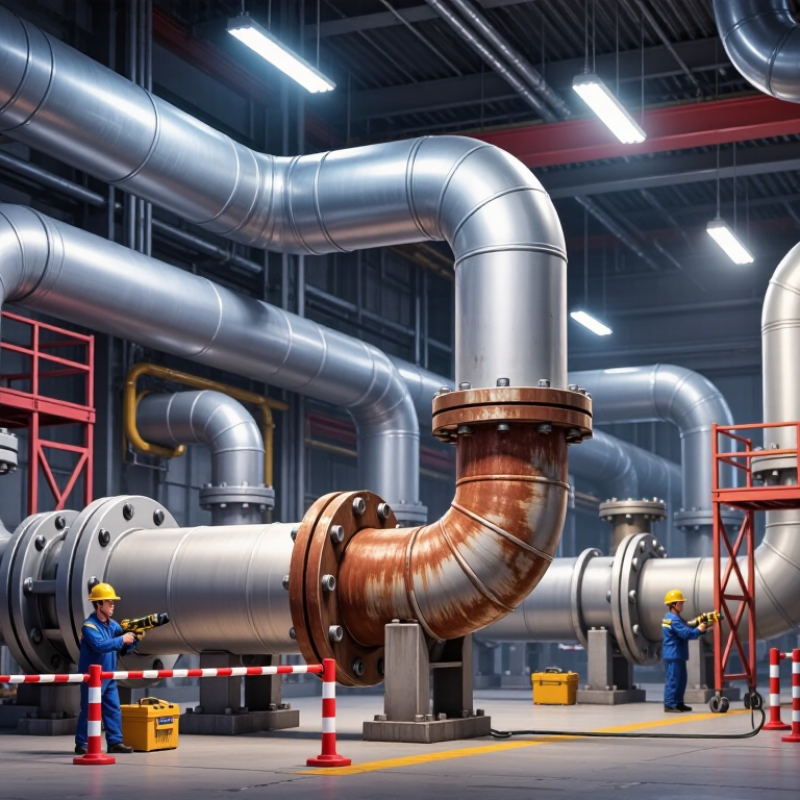
Piping system maintenance is necessary because small defects can become major operational failures. A thin corrosion pit beneath insulation may remain invisible until a flange begins to seep. A blocked low-point drain can also trap water, accelerate corrosion, and weaken an entire section. These problems threaten workers, product quality, production schedules, and the environment.
The financial pressure is real. NACE International’s IMPACT study estimated global corrosion costs at about US$2.5 trillion annually, equal to roughly 3.4% of global economic output. It also reported that 15–35% of corrosion costs could be avoided through better prevention and management. That figure does not mean every repair is preventable. Access can require scaffolding, isolation, draining, cleaning, and specialist inspection. Shutdown time often costs more than the replacement part.
Water infrastructure shows the same pattern. The American Water Works Association reports approximately 240,000 water-main breaks each year in the United States. These failures waste treated water and disrupt roads, homes, and businesses. Regular thickness testing, vibration checks, pressure monitoring, and valve exercising help reveal problems earlier. Still, maintenance plans are never perfect. Inspection intervals may be too long, records may be incomplete, and corrosion can develop faster than expected. A practical program therefore combines standards, field observations, historical data, and cautious judgment. One missed warning can become an expensive emergency.
Which Factors Drive the Cost of Piping Maintenance?
Why Is Piping System Maintenance So Expensive?
Which Factors Drive the Cost of Piping Maintenance?
Piping maintenance costs rise because failures rarely begin where workers can see them. Corrosion may develop beneath insulation, coatings, or accumulated moisture. A small leak can damage supports, flooring, electrical equipment, and nearby production areas. Inspection quality matters. Experienced technicians use thickness measurements, visual checks, pressure testing, and targeted non-destructive methods. These services require trained people, calibrated equipment, and time.
Access is another major cost driver. Pipes above ceilings or inside crowded plant rooms often require scaffolding, lifts, isolation, and ventilation. Production shutdowns can cost more than the repair itself. Emergency work also carries a premium because crews, materials, and permits must be arranged quickly. Replacement parts may need custom dimensions, unusual alloys, or long delivery periods. Material selection should match temperature, pressure, fluid chemistry, and expected service life.
Age makes decisions harder. An older system may contain incomplete drawings, hidden modifications, or mixed materials. That uncertainty increases survey time and can expose problems after work begins. Field reviews often reveal underestimated valve replacement, waste disposal, and reinstatement work. That mistake is avoidable, but not always. Budgets should include inspection findings, contingency funds, and post-repair testing. Cutting inspection hours may appear economical. It can simply move the cost into a larger failure.
How Material Aging and Corrosion Increase Repair Expenses
Why Is Piping System Maintenance So Expensive?
Material aging and corrosion often turn minor defects into costly repairs. In field inspections, a pipe may look sound while its inner wall has lost critical thickness. Rust under insulation is especially difficult to detect. Moisture can remain trapped for years, creating deep pits beneath an undamaged outer surface.
Corrosion rarely causes only one expense. A leaking line may require emergency isolation, drained fluids, temporary barriers, and specialized access equipment. If replacement involves a welded joint, nearby sections may also need inspection and testing. Older pipes can create another problem: their original drawings may be incomplete or inaccurate. Repair teams then spend valuable hours confirming routes, supports, and material grades. Time is money.
A practical maintenance program combines thickness measurements, visual checks, and corrosion-rate tracking. Qualified inspectors should compare current readings with earlier records, not rely on one test. Small changes matter. A few millimeters of wall loss can reduce pressure tolerance and shorten the remaining service life. However, no inspection plan is perfect. Coatings may hide damage, sensors can miss isolated pitting, and clean pressure-test results may provide false confidence. Maintenance decisions should include operating temperature, fluid chemistry, vibration, and past repairs. Ignoring one factor can make a cheap repair expensive later.
How Inspections and Access Challenges Affect Maintenance Costs
Piping maintenance becomes expensive when inspectors cannot reach the pipe easily. A visual check may require scaffolding, insulation removal, lighting, and temporary barriers. In operating plants, technicians may also wait for permits or production shutdowns. Access is often the hidden bill. A two-hour inspection can consume an entire shift when preparation takes longer than testing.
Experienced maintenance teams plan inspections around pipe location, temperature, corrosion history, and operating conditions. They may use ultrasonic thickness measurements at welds, elbows, supports, and low points where moisture collects. Small access panels can reduce future labor, but installing them may disturb insulation or fire protection. The pipe may be sound. The surrounding structure may not be.
Poor records create another cost. Without previous thickness readings, engineers cannot judge the corrosion rate confidently. They may request extra tests, remove more insulation, or schedule an unnecessary shutdown. That changes everything. I have seen careful plans fail because a valve blocked the inspection route or a platform was too narrow for equipment. Not every delay is avoidable. However, clearer drawings, updated inspection histories, and permanent access points can make decisions faster and safer. A practical plan should also allow for surprises, because piping rarely matches old drawings perfectly.
Why Is Piping System Maintenance So Expensive? - How Inspections and Access Challenges Affect Maintenance Costs
| Inspection or Access Condition |
Typical Access Method |
Additional Access Cost per Location |
Additional Labor Time |
Typical Operational Impact |
Main Cost Driver |
| Exposed pipe at ground level |
Direct visual inspection and handheld ultrasonic testing |
US$100–300 |
1–3 hours |
Usually no shutdown |
Technician time and test preparation |
| Pipe located above normal working height |
Scaffolding, elevated work platform, or fixed platform |
US$500–2,500 |
4–12 hours |
Possible work-area restrictions |
Equipment rental, assembly, and fall protection |
| Insulated piping requiring inspection |
Insulation removal, inspection, repair, and reinstallation |
US$800–4,000 |
6–20 hours |
May require temporary isolation |
Insulation handling, moisture control, and restoration |
| Piping inside a confined space |
Confined-space entry with gas testing and standby personnel |
US$1,500–6,000 |
8–24 hours |
Strict permit and access controls |
Rescue planning, monitoring, ventilation, and supervision |
| Underground or buried piping |
Ground scanning, excavation, coating removal, and backfilling |
US$2,000–12,000 |
1–5 working days |
Traffic, drainage, or production disruption |
Excavation, reinstatement, and unknown site conditions |
| Piping requiring radiographic testing |
Radiography area setup and controlled exclusion zone |
US$1,000–5,000 |
4–16 hours |
Temporary evacuation or restricted access |
Radiation controls, setup time, and work coordination |
| Piping requiring isolation and draining |
Lockout/tagout, depressurization, draining, and gas freeing |
US$1,000–8,000 |
6–30 hours |
Partial or full process interruption |
Preparation, permits, cleaning, and lost operating time |
| Maintenance during a planned shutdown |
Coordinated inspection, repair, testing, and recommissioning |
US$5,000–50,000+ |
2–14 days |
Production capacity reduced or unavailable |
Multiple contractors, schedule pressure, and downtime |
| Corrosion or damage requiring repair |
Thickness mapping, engineering review, weld repair, and pressure testing |
US$3,000–25,000+ |
1–10 working days |
Depends on service criticality and isolation requirements |
Repair materials, qualified welding, testing, and reinspection |
Planning note: The figures are typical non-brand-specific planning ranges in United States dollars. Actual costs vary with pipe diameter, site location, labor rates, hazardous-area requirements, inspection standards, access duration, and the consequence of process downtime.
How Preventive Planning Can Reduce Long-Term Piping Costs
Why Is Piping System Maintenance So Expensive?
Piping maintenance becomes expensive when small defects remain invisible until production stops. A pinhole beneath insulation can spread corrosion, contaminate insulation, and force an emergency shutdown. NACE’s IMPACT study estimated global corrosion costs at about $2.5 trillion annually, equal to 3.4% of global GDP in 2013. The same study found that effective corrosion management could reduce these costs by 15–35%.
Preventive planning moves attention from urgent repairs to measurable risk. Engineers can map pipe circuits, record thickness readings, and compare corrosion rates over time. Risk-based inspection methods then prioritize thin elbows, dead legs, welds, and sections exposed to moisture. The U.S. Department of Energy reports that predictive maintenance can reduce maintenance costs by roughly 8–12% compared with conventional preventive programs.
Small leaks become outages.
Planning also protects labor and materials. A scheduled repair allows proper isolation, replacement parts, permits, and skilled technicians to be arranged together. It avoids rushed fabrication and repeated access work. However, preventive programs are not flawless. Sensors can drift, drawings may be outdated, and inspection intervals can be set too confidently. Field teams should review assumptions after process changes, unusual vibration, or repeated coating failure. A practical plan is a living record, not a folder that waits for the next emergency.
Why Is Piping System Maintenance So Expensive?
How Preventive Planning Can Reduce Long-Term Piping Costs
Reactive maintenance is used as the baseline cost index of 100. Preventive maintenance can reduce maintenance costs by approximately 12%–18% compared with a run-to-failure approach, according to documented operations and maintenance benchmarks. Early inspections, corrosion monitoring, planned shutdowns, and scheduled component replacement help reduce emergency labor, production interruptions, and secondary equipment damage.
Benchmark basis: U.S. Department of Energy operations and maintenance guidance reporting typical preventive-maintenance savings of 12%–18% versus reactive maintenance.
FAQS
Small defects can become major failures. A hidden corrosion pit may eventually cause a flange to leak. Workers, product quality, schedules, and the environment may suffer. Early action matters.
A blocked drain can trap water inside the system. Moisture accelerates corrosion and weakens nearby pipe sections. The damage may remain hidden beneath insulation.
Corrosion creates enormous global costs, estimated near 2.5 trillion dollars annually. Better prevention may avoid part of this expense. Not every repair is preventable.
Water mains can break frequently, wasting treated water and disrupting roads, homes, and businesses. Thickness testing, pressure monitoring, vibration checks, and valve exercising reveal warning signs earlier.
Ultrasonic thickness testing helps measure wall loss. Inspectors often check welds, elbows, supports, and low points. Vibration and pressure checks add useful evidence. One test is not enough.
Inspectors may need scaffolding, lighting, insulation removal, permits, or temporary barriers. A two-hour inspection can consume an entire shift. Access is costly.
Permanent access panels can simplify later inspections. Clear routes also reduce preparation time and safety delays. However, installation may disturb insulation or fire protection. The pipe may be sound. The structure may not be.
Previous thickness readings help engineers estimate corrosion rates. Missing records may lead to extra testing, insulation removal, or unnecessary shutdowns. Old drawings can also be wrong. Plans fail.
No. Inspection intervals may be too long, and corrosion can progress unexpectedly. A practical program combines standards, field observations, historical data, and cautious judgment. Leave room for surprises.
Conclusion
Piping system maintenance is essential for protecting operational safety, preventing leaks, maintaining efficiency, and avoiding unexpected shutdowns. However, the total cost can rise quickly because of labor, replacement materials, emergency repairs, inspection requirements, and difficult working conditions. Aging pipes are especially vulnerable to corrosion, cracking, erosion, and weakened joints, which can turn minor defects into expensive failures if they are not identified early.
Access challenges also increase expenses when pipes are located underground, inside walls, at height, or in hazardous operating areas. Regular inspections, accurate records, and preventive planning can help organizations prioritize critical components and schedule repairs before damage becomes severe. A practical maintenance strategy should combine condition monitoring, timely cleaning, corrosion control, and planned component replacement. By understanding system risks and investing in early intervention, operators can improve reliability and discover how to reduce maintenance costs in piping systems while extending service life and minimizing disruptive emergency work.

 Dactron Pipe