Choosing the right pipe can affect safety, service life, installation time, and maintenance costs. In real projects, the decision is rarely based on appearance alone. A seamless pipe is formed without a longitudinal weld, while a welded pipe is produced by joining rolled steel or another metal strip. That manufacturing difference influences strength consistency, wall thickness, available sizes, and inspection requirements.
So, what is the difference between seamless and welded pipes? The practical answer depends on pressure, temperature, fluid type, diameter, and operating conditions. Seamless pipes are often selected for demanding applications where uniformity and resistance to internal pressure matter. Welded pipes can offer broader size options, controlled production, and lower material costs. However, neither choice is automatically better. It depends.
This guide examines five important differences between seamless and welded pipes, including manufacturing methods, mechanical performance, dimensional accuracy, cost, and typical applications. A pipe that performs well in a refinery may be unnecessary for a low-pressure water line. Field experience also shows that poor material selection can create problems at joints, bends, and supports. Details matter. Buyers should review material grades, wall thickness, welding quality, nondestructive testing, and relevant project standards before ordering. Some claims about seamless pipe being “always stronger” need careful reflection, because performance also depends on alloy, heat treatment, production quality, and service conditions. The goal is a balanced comparison that helps engineers, contractors, and purchasing teams make a reliable decision.
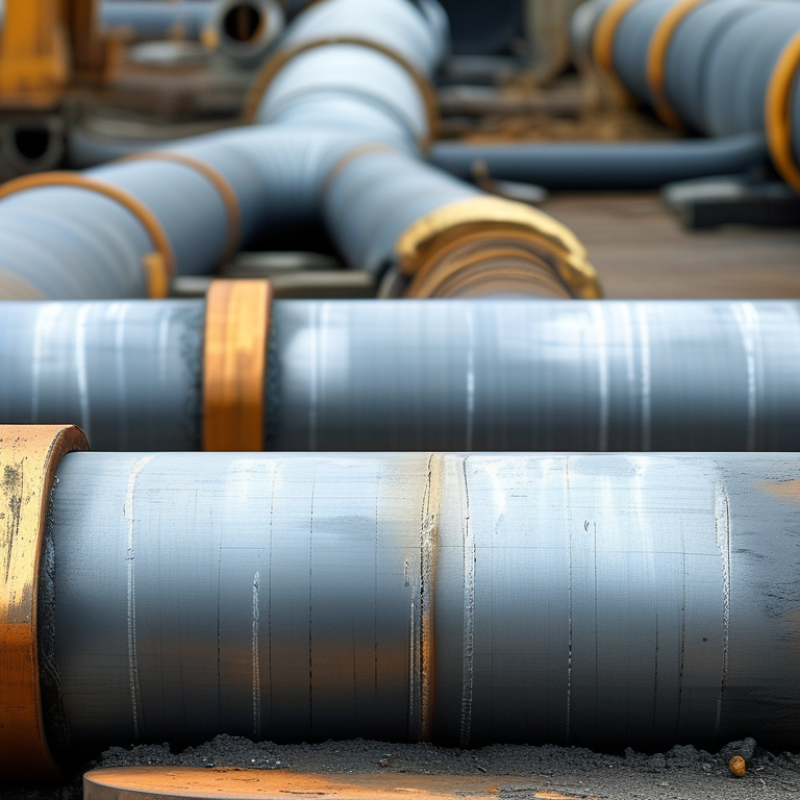
Seamless and welded pipes begin with different manufacturing routes. A seamless pipe starts as a solid steel billet, heated and pierced through its center. Rolling then shapes the hollow section. A welded pipe begins with steel plate or strip. Machines form it into a tube and join the edges using heat or pressure. That joint is the weld seam.
The main difference is visible under inspection. Seamless pipe has no longitudinal seam, while welded pipe contains one. This can improve resistance to localized weakness in demanding service. However, modern welding and inspection can produce highly reliable pipe. The choice depends on pressure, temperature, diameter, and project standards.
ASTM dimensional tables and ASME B36.10M help engineers compare wall thicknesses. The U.S. Energy Information Administration reports more than three million miles of natural gas pipelines in the United States. Such a large network uses both pipe types, not seamless pipe alone. A careless shortcut is assuming seamless always means safer.
Tips: Check the weld inspection method, not only the product label. For high-pressure or high-temperature service, review mill certificates, non-destructive testing, and heat-treatment records. Welded pipe often offers better dimensional control and lower cost in larger sizes. Seamless pipe may suit severe loading, but it can cost more and vary slightly in wall thickness. The World Steel Association reported about 1.89 billion tonnes of crude steel production in 2023, reminding buyers that raw material quality still depends on traceability and processing.
Seamless and welded pipes begin with different manufacturing routes. A seamless pipe starts as a solid steel billet. The billet is heated, pierced, and rolled over a mandrel to create a hollow section. Further rolling controls its outside diameter and wall thickness. No longitudinal weld exists. This process can provide strong continuity, especially under high pressure and temperature. However, seamless production may show greater dimensional variation in larger sizes. It also requires more material and energy.
A welded pipe begins with a flat steel strip or plate. Rollers form it into a cylinder, then join the edges with resistance or fusion welding. The weld bead may be trimmed, heat-treated, and tested. More control is possible here. Manufacturers can produce long lengths with consistent dimensions and competitive costs. Yet the weld zone needs careful inspection because its heat history differs from the parent metal. Inspectors commonly use visual checks, ultrasonic testing, eddy-current testing, and hydrostatic pressure testing. Small defects matter.
The manufacturing choice depends on pressure, diameter, service temperature, and budget. Seamless does not automatically mean stronger in every application. Welded does not automatically mean unreliable. In practical fabrication, poor forming, incorrect heat treatment, or weak inspection can reduce either pipe’s performance. That part is easy to overlook. Engineers should review material certificates, dimensional reports, weld procedures, and test results before approval. Even experienced teams may need to reconsider a specification when actual operating conditions change.
The chart uses a comparative process-emphasis index from 1 to 5, based on the typical manufacturing route. Seamless pipe begins with a solid billet that is pierced and rolled or drawn, while welded pipe is made from plate or strip that is formed and joined along a longitudinal or spiral seam. Both routes may include sizing, heat treatment, testing, and finishing; the exact sequence varies by pipe grade, standard, and application.
When comparing strength, seamless pipe usually offers more uniform resistance because it has no longitudinal weld. This matters in high-pressure lines, where repeated pressure cycles can expose weak points. However, seamless pipe is not automatically stronger in every application. Wall thickness, steel grade, diameter, heat treatment, and manufacturing quality still control performance.
Welded pipe begins as a flat plate or strip formed into a cylinder. Its weld area creates a heat-affected zone that requires careful inspection. Modern welding methods can produce reliable joints, especially when ultrasonic testing, radiographic testing, and hydrostatic pressure testing are applied. In practical installations, a correctly specified welded pipe may outperform a poorly selected seamless pipe. That detail is often overlooked.
Durability depends on more than pressure rating. Moisture, chemicals, temperature changes, vibration, and poor supports can shorten service life. A pipe exposed to outdoor rain may develop external corrosion around damaged coating or weld finishing. Seamless construction removes one potential defect line, but it does not prevent corrosion or fatigue. I have seen assumptions fail when engineers compared pipe types without checking actual operating conditions. Pressure ratings should come from the applicable specification, design calculations, and verified test records. A thicker wall is not always the best answer.
Seamless and welded pipes can look similar on a specification sheet, yet their prices often differ sharply. Seamless pipe starts from a solid billet and requires piercing, rolling, and heat treatment. Welded pipe begins with steel strip, formed and joined along a controlled seam. That extra billet processing usually raises seamless costs. However, the premium is not fixed. Steel prices, wall thickness, inspection level, and order volume can change the final quote.
Size also affects the decision. ASME B36.10M covers carbon steel pipe dimensions from small nominal sizes to very large diameters. Welded production is often more economical for large diameters and long lengths. Seamless pipe is commonly selected for smaller, high-pressure applications, although this is not an absolute rule. ASTM A999/A999M and ASTM A530/A530M require defined material, testing, and workmanship controls. Buyers should compare the actual grade and test schedule, not only the manufacturing method.
Surface quality is another visible difference. Seamless pipe avoids a longitudinal weld bead, but its hot-working surface may show scale, pits, or rolling marks. Welded pipe can provide a cleaner outer surface, yet the weld zone needs careful inspection and finishing. The American Iron and Steel Institute reported global crude steel production near 1.9 billion tonnes in 2023, showing how broad steel supply can influence pricing. Still, a global figure cannot predict one project’s quote. I would request sample photographs, dimensional reports, weld-testing records, and surface-roughness requirements before choosing. That small step prevents an expensive assumption.
Choosing between seamless and welded pipe depends on the application, not marketing language. Seamless pipe forms from a solid billet, so it has no longitudinal weld. This structure suits high-pressure steam, hydraulic systems, and critical process lines. It tolerates stress more evenly, especially when temperatures rise and fall repeatedly.
Welded pipe begins as a rolled plate or strip joined along its length. Modern welding and inspection can produce reliable results. It usually offers wider size availability, lower material waste, and a more competitive price. Large water lines, structural supports, drainage systems, and low-pressure air services often benefit from welded construction. The weld zone still needs careful inspection, particularly where vibration or corrosive fluids are present.
Wall thickness also affects the decision. Seamless pipe may provide stronger pressure resistance, but it is not automatically the better choice. A poorly selected grade can fail despite seamless construction. Welded pipe can perform well when engineers verify weld quality, corrosion allowance, pressure ratings, and operating temperature. In field inspections, alignment problems and inadequate supports often create more trouble than the pipe type itself. That detail is easy to miss. For sour or highly corrosive service, material compatibility and testing should guide selection under recognized technical standards. For routine utility lines, welded pipe may be the practical answer. For severe pressure cycling, seamless pipe is often safer. Yet every project deserves a documented review, because real conditions rarely match a simple comparison chart.
: A seamless pipe begins as a solid steel billet. The billet is heated, pierced, and rolled around a mandrel. No longitudinal weld is present. Its wall thickness may vary slightly.
A welded pipe starts with flat steel strip or plate. Rollers form the metal into a tube. Heat or pressure joins the edges. The joining line is called the weld seam.
Neither type is automatically stronger in every application. Seamless pipe can suit severe pressure or temperature conditions. Modern welded pipe can also perform reliably after careful testing. The specification matters more than the label.
Welded pipe often suits large diameters and long lengths. It usually provides consistent dimensions and competitive pricing. The weld zone needs visual, ultrasonic, or pressure testing. Small defects still matter.
Seamless production uses a solid billet and several forming stages. Piercing, rolling, and heat treatment increase material and energy use. Prices also depend on steel grade, size, wall thickness, and order volume. The premium is not fixed.
Not necessarily. Seamless pipe has no weld bead, but its surface may show scale or rolling marks. Welded pipe can have a cleaner outer surface. Its seam may require trimming, finishing, and close inspection.
Large diameters often favor welded production because forming long sections is efficient. Smaller high-pressure systems may use seamless pipe more frequently. This is only a common pattern. Actual pressure and temperature must guide selection.
Review material certificates, dimensional reports, and heat-treatment records. For welded pipe, request weld procedures and non-destructive testing results. Hydrostatic test records may also be important. Photos help, but paperwork reveals more.
Yes. Poor forming, incorrect heat treatment, or weak inspection can affect either pipe type. A perfect-looking surface may hide an internal defect. I might overlook changing service conditions, so the specification deserves another review.
Seamless and welded pipes are both widely used for transporting fluids, gases, and structural loads, but they are made differently. Seamless pipes are formed from a solid billet and shaped without a longitudinal joint, while welded pipes are produced by rolling steel into a tube and joining the edges. This manufacturing distinction influences performance: seamless pipes generally offer consistent strength and reliable resistance to high pressure, whereas welded pipes can provide excellent durability when the weld is properly controlled and inspected.
When asking “what is the difference between seamless and welded pipes,” cost, size range, and surface finish are also important. Welded pipes are often more economical and available in larger diameters, while seamless pipes may have smoother internal surfaces and better suitability for demanding pressure conditions. The best choice depends on the application. Seamless pipe is commonly preferred for high-pressure, high-temperature, or critical systems, while welded pipe is practical for construction, water transfer, general industrial use, and projects where budget and large dimensions are key considerations.

Dactron Pipe