How to Choose Steel Pipes for High Pressure Applications?

Time:2026-10-19 Author:Charlotte
0%

Selecting steel pipes for high-pressure service is not a simple matter of choosing the thickest wall. The wrong grade, diameter, or connection can create weak points under pressure, heat, and vibration. In this guide, we explain how to choose steel pipes for high pressure applications with practical engineering considerations.

Experienced engineers examine design pressure, operating temperature, fluid properties, corrosion risks, and cyclic loading. A pipe carrying hot steam needs different performance from one transporting oxygen, water, or corrosive chemicals. Wall thickness must account for pressure, material strength, manufacturing tolerance, and possible corrosion allowance. Small details matter.

Connections matter too.

Seamless pipes are often selected for demanding pressure duties because they avoid a welded seam. However, properly manufactured welded pipes can also suit many applications when standards, inspection, and weld quality are controlled. Choosing only by price is risky. Choosing only by reputation is not enough either.

Reliable selection should reference recognized standards, certified test reports, and traceable material records. Depending on the project, engineers may review standards such as ASTM, ASME, API, or EN requirements. Supplier experience also deserves careful checking. Ask for hydrostatic test results, chemical composition, mechanical properties, and dimensional records.

Even experienced professionals can overlook installation conditions. Supports, bends, valves, and sudden pressure changes may influence actual performance. A careful review may reveal that the first choice needs revision. That is not failure. It is responsible engineering.
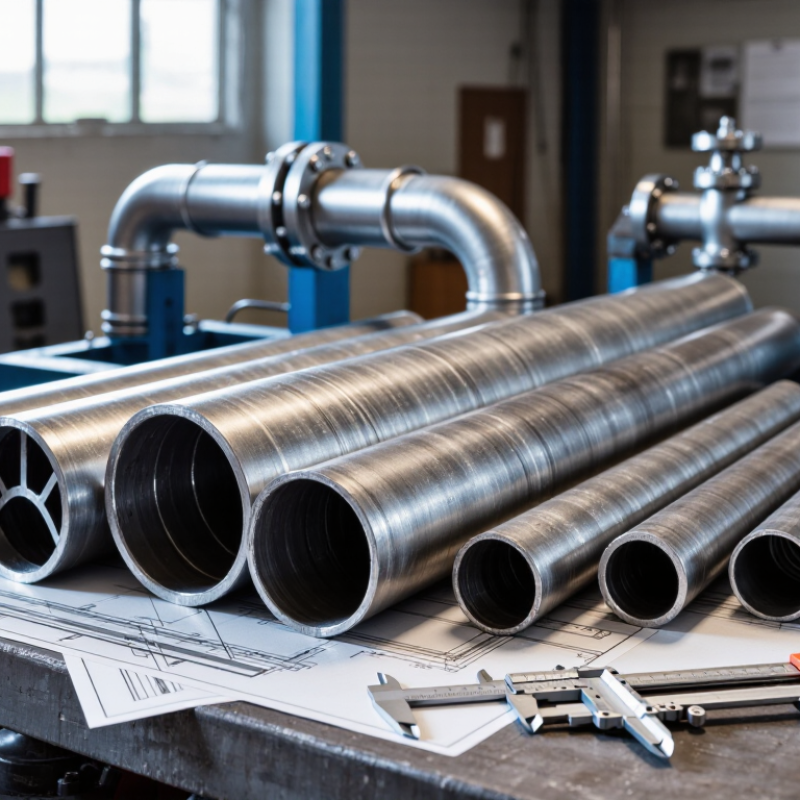
How to Choose Steel Pipes for High Pressure Applications?

Define Pressure, Temperature, and Service Conditions

How to Choose Steel Pipes for High Pressure Applications?

Define pressure before choosing a steel pipe. Operating pressure describes normal service, while design pressure covers credible peaks. Include pump surges, blocked outlets, thermal expansion, and pressure cycling. A pipe rated for average pressure may fail during a short spike. Numbers matter. Record pressure at the pipe wall, not only at the pump.

Temperature changes strength, dimensions, and toughness. Specify normal, minimum, maximum, and upset temperatures. A pipe may perform well at room temperature but lose strength when heated. Very low temperatures can also increase brittleness. Check the expected temperature at flanges, bends, and welded joints. These locations often experience different conditions. I have seen projects overlook insulation damage and underestimate surface temperature.

Service conditions complete the selection. Identify the fluid, concentration, flow velocity, solids, moisture, and corrosive contaminants. Hydrogen-containing or sour environments require additional material controls and testing. Chlorides may increase corrosion risks, especially near hot surfaces. Consider startup, shutdown, cleaning, and long idle periods. Frequent cycling can matter more than one high-pressure event. Select wall thickness after accounting for corrosion allowance, manufacturing tolerance, and external loads. Then verify the result against the applicable design code and qualified engineering review. That final check is not a formality. It can expose an assumption that seemed reasonable but was never measured.

Select the Appropriate Steel Pipe Material and Grade

For high-pressure service, steel pipe material and grade must match the operating environment. Pressure alone is not enough. Record the design pressure, temperature range, fluid chemistry, flow velocity, and expected service life. Carbon steel suits many dry, moderate-temperature systems and offers good strength at a practical cost. However, wet carbon dioxide, chlorides, or acidic fluids can cause rapid corrosion. Stainless steel may perform better, while duplex steel can provide higher strength and improved resistance to chloride stress corrosion.

Grade selection should follow a recognized design code and verified material data. Compare yield strength, tensile strength, impact toughness, allowable stress, and temperature limits. A stronger grade is not automatically safer. At low temperatures, poor toughness can create a brittle fracture risk. For sour or corrosive service, check hardness limits and resistance requirements carefully. Seamless pipe is often selected for demanding applications, but a qualified welded pipe can also work when its manufacturing controls and inspection records are acceptable.

In practice, review the mill certificate, heat number, chemical composition, mechanical test results, and non-destructive examination reports. Hydrostatic testing should match the project specification and applicable code. I have seen specifications focus heavily on pressure rating while overlooking corrosion allowance. That gap can shorten service life. Engineers should also verify welding procedures, fittings, wall thickness tolerance, and traceability before installation. Small documentation errors matter. They can delay approval or hide a material mismatch.

Choose Pipe Dimensions, Wall Thickness, and Pressure Rating

Choosing steel pipes for high pressure begins with accurate service data. Define the fluid, design pressure, temperature, flow rate, and operating cycles. Pressure alone is not enough. Pipe dimensions control velocity, pressure loss, vibration, and connection fit. Select the nominal diameter from the required flow, then confirm the actual inside diameter. Nominal size is not the bore.

Wall thickness must satisfy the applicable design code. The calculation should include allowable stress, weld efficiency, manufacturing tolerance, and corrosion allowance. A pipe may meet pressure requirements today but lose strength after years of internal corrosion. Specify the required minimum wall thickness, not only the nominal schedule. Ultrasonic thickness checks can reveal uneven areas that drawings cannot show. Thin walls can fail quietly.

Pressure rating must match the pipe, fittings, flanges, valves, and joining method. Check the rating at the real operating temperature, because allowable pressure often decreases as temperature rises. Consider pressure surges, cyclic loading, external forces, and support spacing. More steel is not always safer; excessive thickness increases weight, welding difficulty, and residual stress. A practical review should verify material certificates, traceability, dimensional inspection, and pressure testing by qualified personnel. Incomplete operating data remains a serious weakness. When conditions are uncertain, the design should pause rather than rely on a convenient rating.

Evaluate Manufacturing Standards, Testing, and Certifications

How to Choose Steel Pipes for High Pressure Applications?

For high pressure service, begin with the governing design code, not a supplier’s catalogue. API 5L and ISO 3183 specify requirements for line pipe, including chemical composition, mechanical performance, dimensions, and traceability. ASME B31.3 addresses process piping design, but it is not a universal pipe certification. This distinction matters. A pipe can meet a material standard while failing the project’s pressure, temperature, or fluid requirements.

Request complete mill test reports for every heat number. Check yield strength, tensile strength, elongation, impact toughness, and heat-treatment records. Hydrostatic testing should match the applicable standard and purchase specification. For critical welds, ultrasonic or radiographic examination can reveal defects that visual inspection misses. Ask whether testing was performed by the manufacturer, an accredited laboratory, or an independent inspector. The difference is significant. Certificates deserve verification.

The NACE IMPACT study estimated that corrosion costs about 3.4% of global gross domestic product, or roughly 2.5 trillion US dollars annually. That figure supports careful material selection, especially where moisture, chemicals, or sour service may exist. Confirm corrosion allowances, hardness limits, and relevant sour-service requirements before ordering. Independent certification to ISO/IEC 17025 can strengthen laboratory reliability, while ISO 9001 supports process control but does not prove pipe quality. I have seen paperwork look complete while heat numbers were poorly matched. Treat documentation as evidence, not as proof. Verify markings, test records, and inspection hold points before installation.

How to Choose Steel Pipes for High Pressure Applications? - Evaluate Manufacturing Standards, Testing, and Certifications
Evaluation Dimension Relevant Standard or Requirement Typical Material or Grade What to Verify Why It Matters for High-Pressure Service
Seamless Process Pipe ASTM A106/A106M Grade B or Grade C carbon steel Seamless manufacturing, chemical composition, tensile properties, yield strength, elongation, dimensional tolerances, and hydrostatic or approved nondestructive examination requirements. Designed for elevated-temperature and pressure-containing service where a longitudinal weld may be undesirable.
General Pressure Pipe ASTM A53/A53M Grade B, Type S or Type E Confirm whether the pipe is seamless or welded, review the applicable manufacturing type, inspect weld quality for electric-resistance-welded pipe, and verify pressure-test records. Can be suitable for selected pressure services, but the project specification must confirm that its permitted temperature, chemistry, and manufacturing route are adequate.
Oil and Gas Transmission API Specification 5L / ISO 3183 Specified PSL 1 or PSL 2 grade, such as L245 or L360 / equivalent designation Product specification level, pipe grade, delivery condition, seamless or welded process, weld inspection, full-body inspection, traceability, and supplementary sour-service requirements where applicable. Provides a structured framework for line-pipe manufacture, testing, documentation, and traceability in transmission systems.
High-Temperature Pressure Service ASTM A335/A335M Ferritic alloy-steel grades such as P11 or P22 Alloy chemistry, heat treatment, tensile and hardness requirements, hydrostatic testing, and required nondestructive examination. Chromium-molybdenum alloying improves resistance to elevated-temperature strength loss and oxidation compared with ordinary carbon steel.
Low-Temperature Pressure Service ASTM A333/A333M Low-temperature carbon or alloy-steel grades, commonly Grade 6 for carbon steel Specified impact-test temperature, absorbed energy, heat treatment, chemical composition, tensile properties, and pressure-test results. Impact testing helps reduce brittle-fracture risk when the operating temperature is below the transition range of ordinary carbon steel.
Boiler and Heat-Exchanger Tubes ASME SA-192, SA-209, SA-213, or another project-specified ASME material specification Carbon steel or alloy steel selected for the design temperature Material specification, tube dimensions, heat treatment, eddy-current or ultrasonic examination, hydrostatic or nondestructive testing, and surface condition. Tube-wall integrity and resistance to creep, oxidation, and thermal degradation are critical in high-pressure thermal equipment.
Dimensions and Wall Thickness ASME B36.10M for welded and seamless wrought-steel pipe; ASME B36.19M for stainless-steel pipe where applicable Nominal pipe size, schedule, outside diameter, and calculated wall thickness Measure outside diameter, wall thickness, ovality, length, end preparation, and pipe schedule. Check the design calculation rather than selecting a schedule by pressure alone. Pressure capacity depends on material strength, outside diameter, wall thickness, temperature, corrosion allowance, weld efficiency, and design code.
Design Pressure and Temperature Applicable design code, such as ASME B31.3, ASME B31.4, ASME B31.8, or the governing local pressure-equipment code Project-specific material and dimensional selection Confirm design pressure, design temperature, fluid category, allowable stress, corrosion allowance, cyclic service, external loads, and safety factors. A pipe is not automatically suitable for high pressure because of its nominal grade; suitability must be demonstrated by the governing design calculation.
Hydrostatic Pressure Testing Product standard and applicable piping or pressure-equipment code All pressure-retaining pipe categories, subject to the specified standard Test medium, test pressure, holding time, calibrated gauges, temperature conditions, test boundaries, leakage acceptance, and permanent test records. Hydrostatic testing detects leaks and gross defects before installation. The required pressure and duration must come from the applicable standard or project specification.
Nondestructive Examination Applicable product standard plus recognized methods such as ASTM E213, ASTM E273, ASTM E309, ASTM E570, or ISO 10893 series Seamless or welded pipe, depending on the inspection plan Specify the method, coverage, calibration blocks, sensitivity, operator qualification, acceptance criteria, and report traceability. Typical methods include ultrasonic, radiographic, eddy-current, magnetic-particle, and liquid-penetrant testing. Detects planar, volumetric, surface, or weld-related discontinuities that may not be revealed by dimensional inspection alone.
Mechanical and Metallurgical Testing Product standard and referenced methods such as ASTM A370, ASTM E23, and ASTM E112 where applicable Grade-specific carbon steel or alloy steel Tensile strength, yield strength, elongation, hardness, flattening or bend test, impact toughness, grain size, and heat-treatment records as required. Confirms that the pipe has the required strength, ductility, toughness, and metallurgical condition for the service environment.
Corrosion and Sour-Service Control NACE MR0175 / ISO 15156 for relevant wet hydrogen-sulfide environments Material selected according to partial pressure, temperature, pH, chloride level, and environmental limits Material hardness, heat treatment, chemistry, environmental restrictions, qualification testing, and compliance documentation. Controls sulfide stress cracking, hydrogen-induced cracking, and other environmentally assisted failures in sour-service equipment.
Material Traceability EN 10204 inspection documents, typically Type 3.1; Type 3.2 when independent inspection is contractually required Heat-number-controlled pipe and fittings Match each pipe to its heat number, chemical analysis, mechanical results, dimensions, heat treatment, inspection results, and marking. Enables verification of the supplied material and supports quality control, repair assessment, and future maintenance.
Quality Management ISO 9001-certified quality management system, when required by the purchaser or project Manufacturer with documented production and inspection controls Review the certificate scope, validity, manufacturing location, internal inspection procedures, nonconformance control, calibration system, and audit records. Supports consistent manufacturing and documentation, but an ISO 9001 certificate does not replace product-specific testing or design-code compliance.
Pressure-Equipment Regulatory Compliance Applicable jurisdictional requirements, such as the Pressure Equipment Directive 2014/68/EU when placed on the European market Material and pipe category determined by fluid, pressure, volume, and equipment classification Confirm conformity assessment route, material documentation, permanent marking, technical file requirements, and any notified-body involvement required by the jurisdiction. Regulatory compliance may be mandatory even when the pipe already meets an ASTM, API, or EN product standard.
Final Procurement Check Approved purchase specification and inspection and test plan Project-approved pipe grade, size, schedule, end type, and delivery condition Verify standard edition, grade, size, quantity, heat treatment, test coverage, acceptance criteria, coating or preservation, marking, packing, certificates, and change-control requirements. A complete procurement specification prevents technically compliant-looking pipe from being supplied with the wrong grade, testing level, dimensions, or documentation.

Match Installation Methods with Safety and Maintenance Requirements

How to Choose Steel Pipes for High Pressure Applications?

Match Installation Methods with Safety and Maintenance Requirements

Choosing steel pipe for high pressure service starts with the installation method, not only the pressure rating. Welded systems suit permanent process lines with controlled alignment and full inspection access. Threaded or flanged joints can simplify replacement, but they create more potential leak points. ASME B31.3 requires design, fabrication, examination, and testing controls for process piping.

Buried pipelines need different decisions. External coating, cathodic protection, soil conditions, and drainage become critical. AMPP’s IMPACT study estimates that corrosion costs the global economy about $2.5 trillion annually, equal to roughly 3.4% of global GDP. That figure makes maintenance planning impossible to ignore. Small defects grow.

Field teams should leave space around valves, welds, and supports. This access allows ultrasonic testing, thickness measurement, and safe component replacement. ISO 55000 asset-management guidance supports lifecycle planning instead of reactive repairs. A thicker wall may improve pressure tolerance, but it can complicate welding and increase inspection time.

A practical specification should connect pipe grade, wall thickness, joining method, and inspection frequency. For high-cycle systems, fatigue analysis matters alongside static pressure calculations. I have seen projects overfocus on initial installation cost. That choice often increases shutdown risk later. The approach is not perfect. Soil data, operating temperature, and maintenance skills can change the final selection.

FAQS

What information is needed before selecting a high-pressure steel pipe?

Define the fluid, design pressure, temperature, flow rate, and operating cycles. Pressure alone is insufficient. Missing data should pause the design.

How should the pipe diameter be chosen?

Select the nominal diameter from the required flow rate. Then confirm the actual inside diameter. Nominal size is not the bore. A smaller bore can increase velocity, pressure loss, and vibration.

What should the wall thickness calculation include?

Include allowable stress, weld efficiency, manufacturing tolerance, and corrosion allowance. Specify the minimum required wall thickness. Drawings can hide uneven areas.

Why is corrosion allowance important?

Internal corrosion can reduce strength over time. Moisture and chemicals may attack the inner surface. A pipe can pass today and weaken later. That possibility is easy to underestimate.

Does a thicker pipe always provide better safety?

No. Excessive thickness increases weight, welding difficulty, and residual stress. More steel is not automatically safer. I might still prefer extra thickness too quickly.

How should pressure ratings be checked?

Match the rating across pipes, fittings, flanges, valves, and joining methods. Check the rating at the actual operating temperature. Allowable pressure often decreases as temperature rises.

What inspections and tests should be requested?

Request material certificates for each heat number. Verify chemical composition, strength, elongation, toughness, and heat-treatment records. Hydrostatic testing should follow the project requirements. Ultrasonic or radiographic testing can reveal hidden weld defects.

How can pipe documentation be verified?

Match markings, heat numbers, certificates, and inspection records. Confirm who performed each test. Independent laboratory accreditation can improve confidence. Complete paperwork is not conclusive proof. It can still contain mismatches.

Conclusion

Choosing the right pipe is essential for safe and reliable high-pressure service. To understand how to choose steel pipes for high pressure applications, begin by defining the operating pressure, temperature range, fluid characteristics, flow requirements, and environmental conditions. These factors help determine the suitable steel material and grade, including its strength, toughness, corrosion resistance, and compatibility with the transported medium. The pipe’s outside diameter, wall thickness, length, and pressure rating should then be selected according to design calculations and expected pressure fluctuations.

It is also important to evaluate manufacturing standards, inspection procedures, pressure testing, traceability, and relevant certifications. Quality controls such as dimensional checks, material verification, and non-destructive testing can help identify potential defects before installation. Finally, the installation method should match the project’s safety and maintenance requirements. Proper welding or connection procedures, support systems, protection against corrosion, and access for inspection will improve long-term performance and reduce the risk of leakage, deformation, or unexpected failure.

Charlotte

Charlotte

Charlotte is a seasoned marketing professional with a deep understanding of the company's portfolio and a passion for elevating its presence in the market. With a keen eye for detail and a commitment to excellence, she ensures that our professional blog is regularly updated with insightful articles......